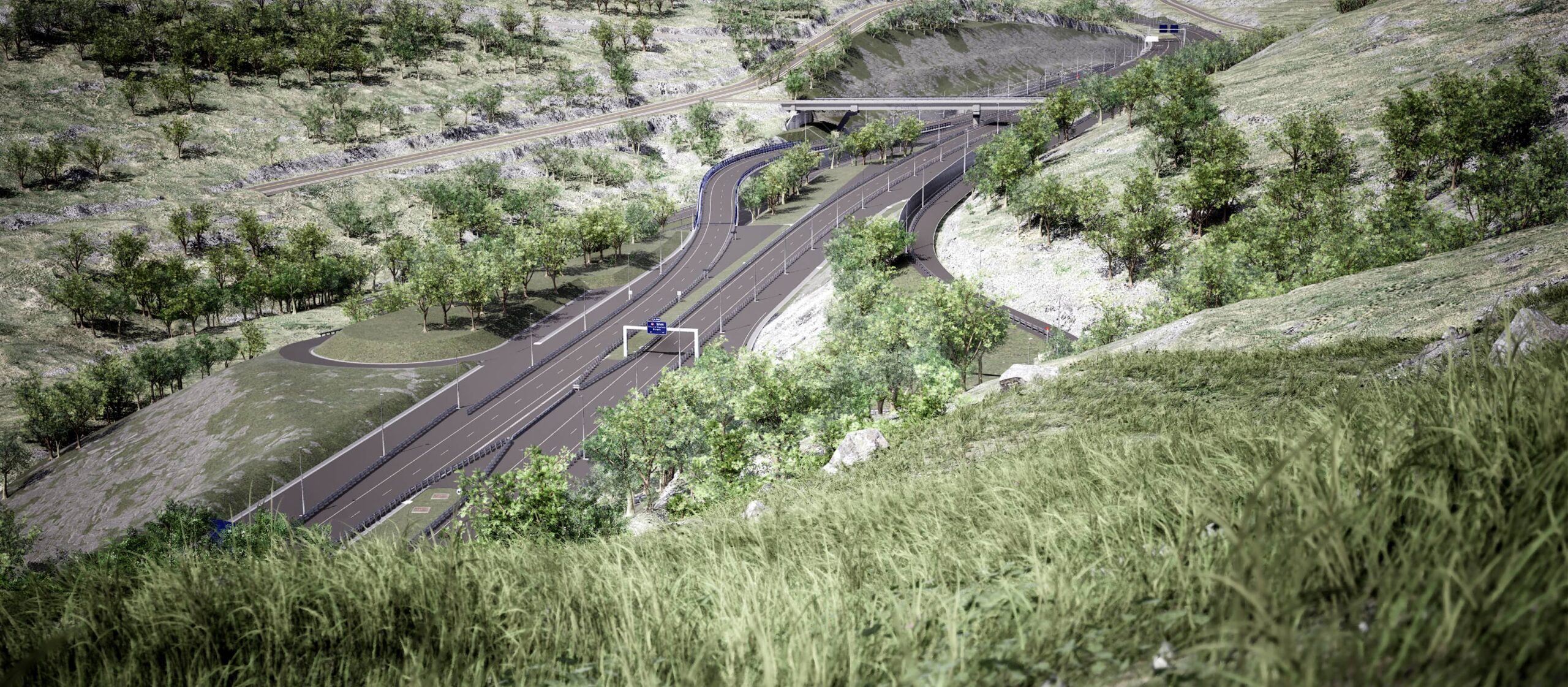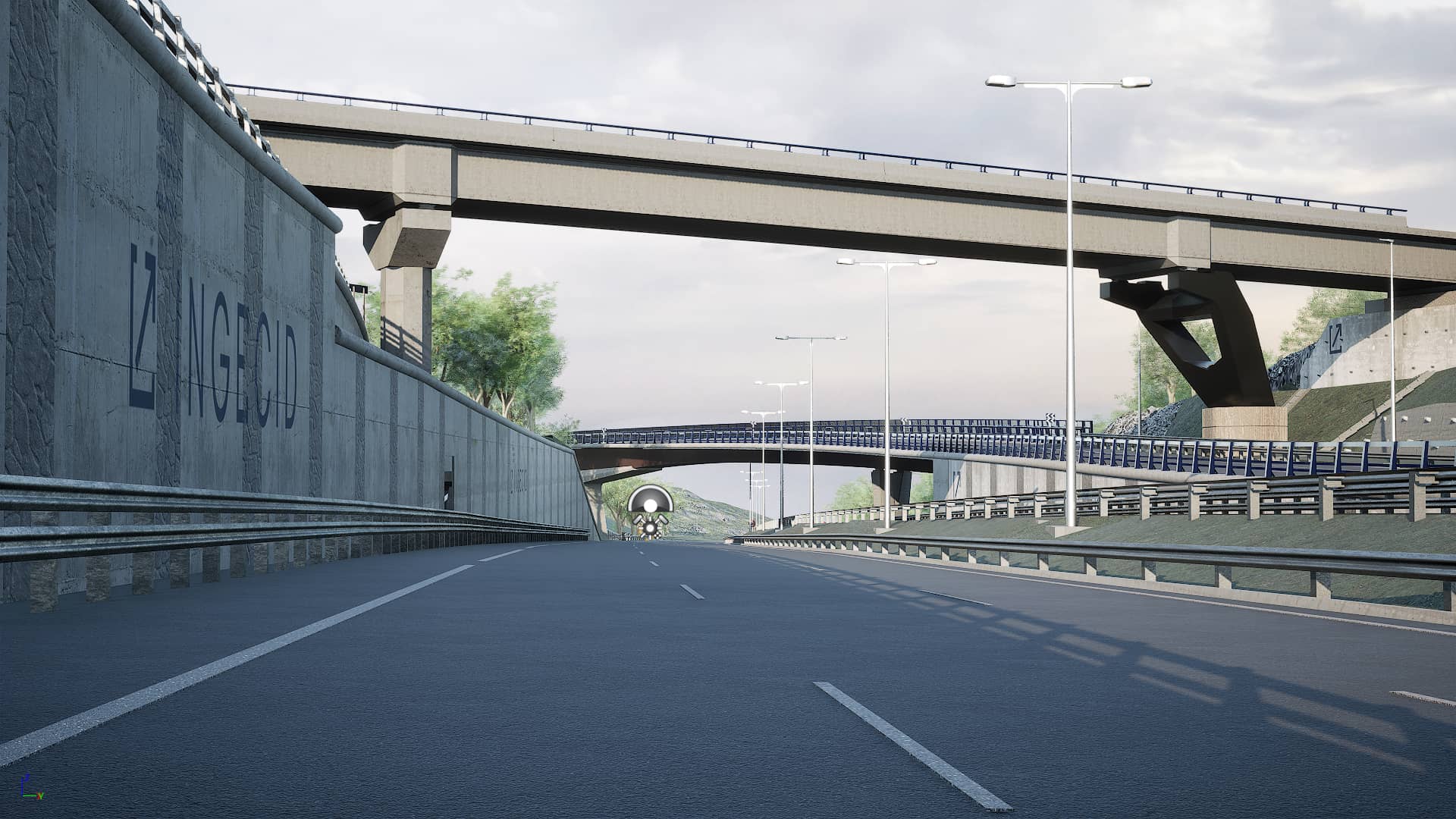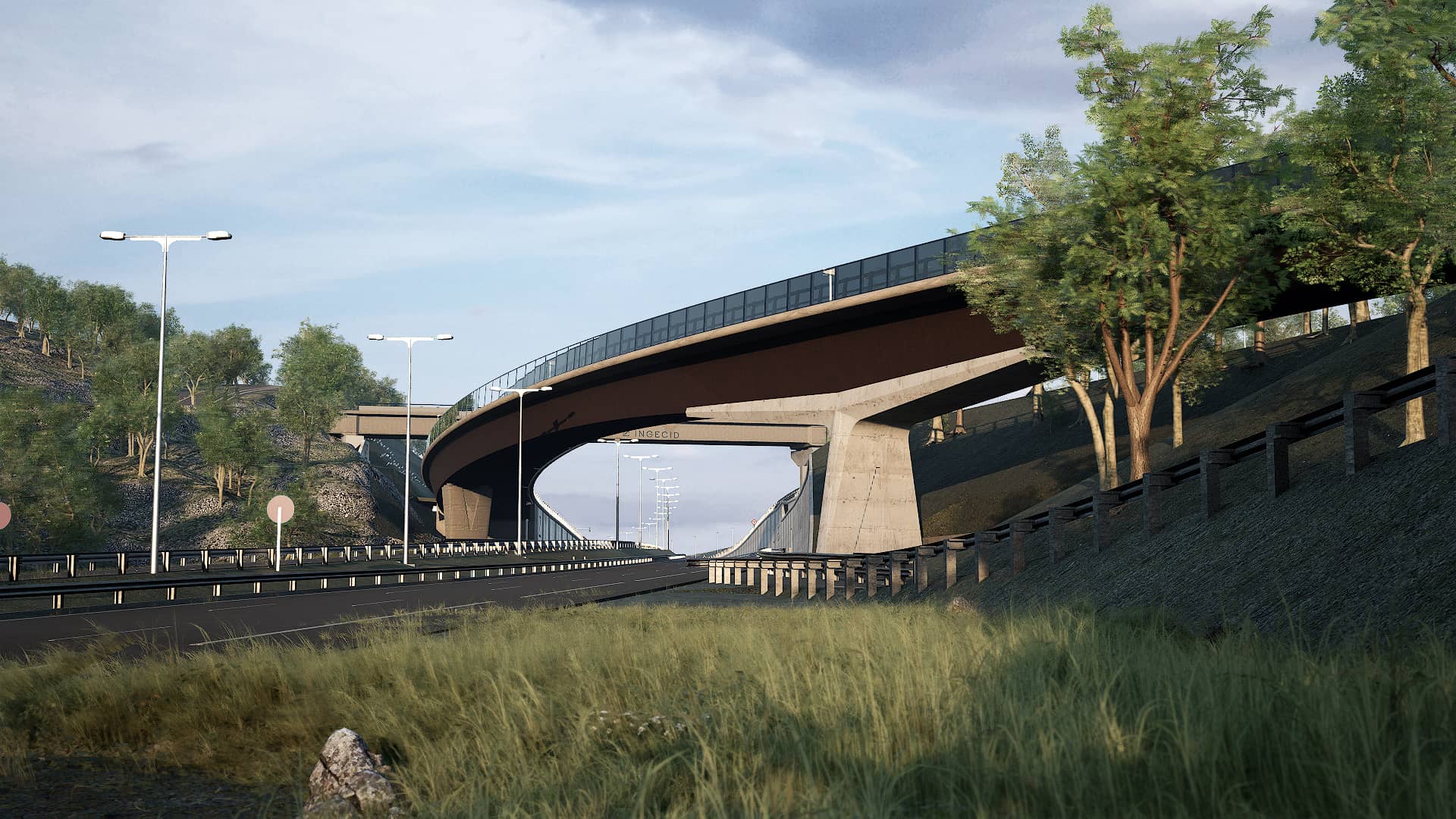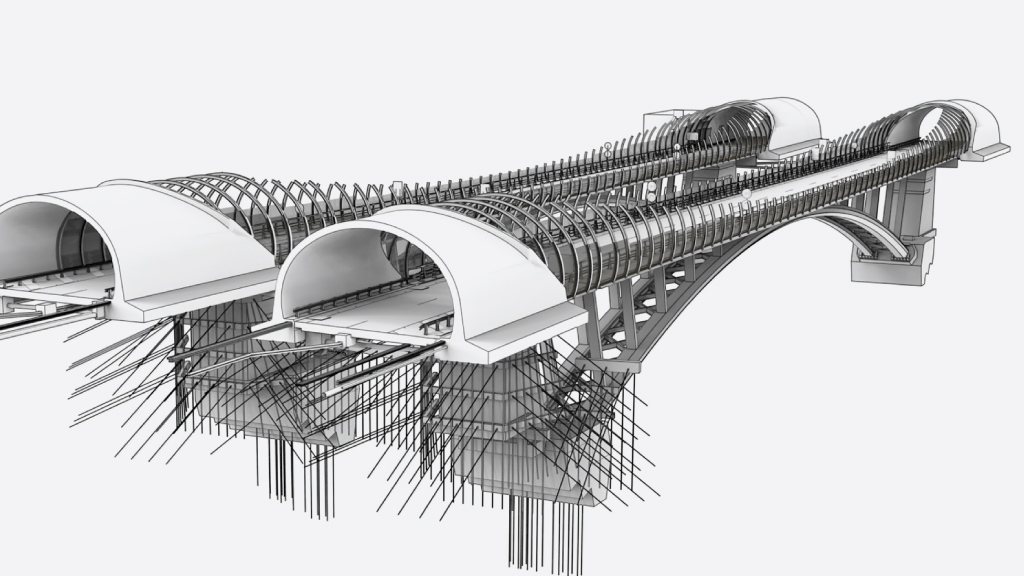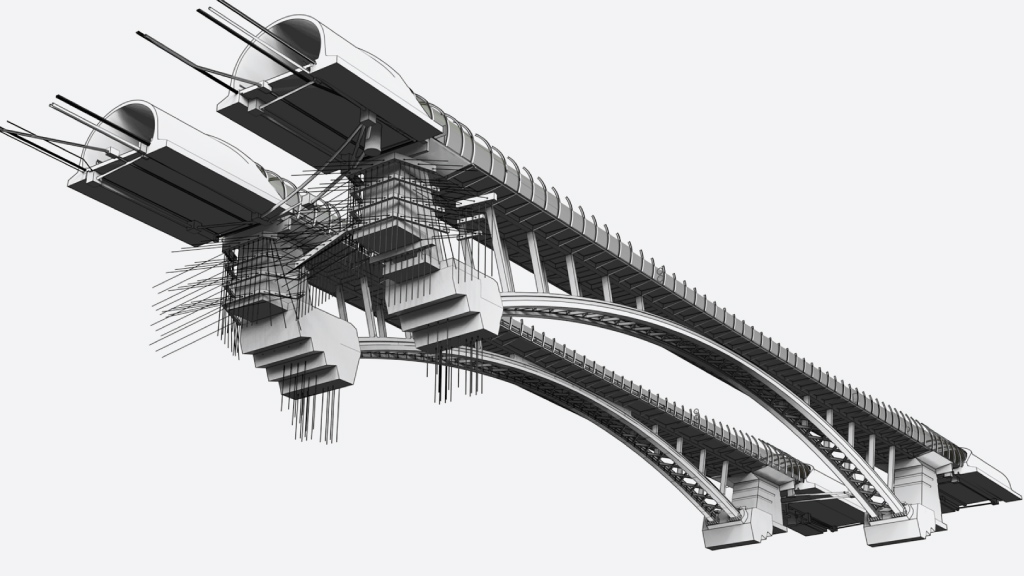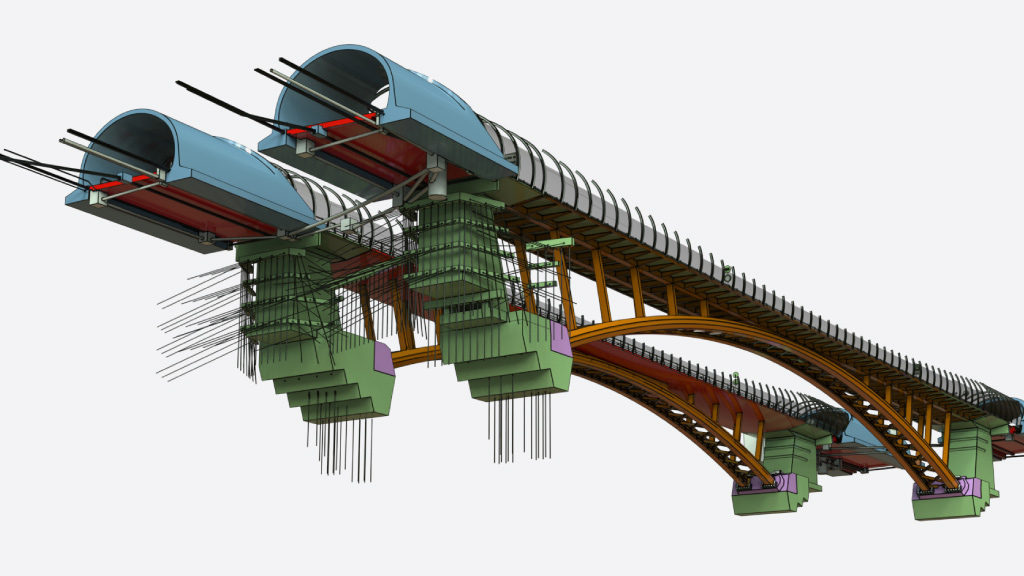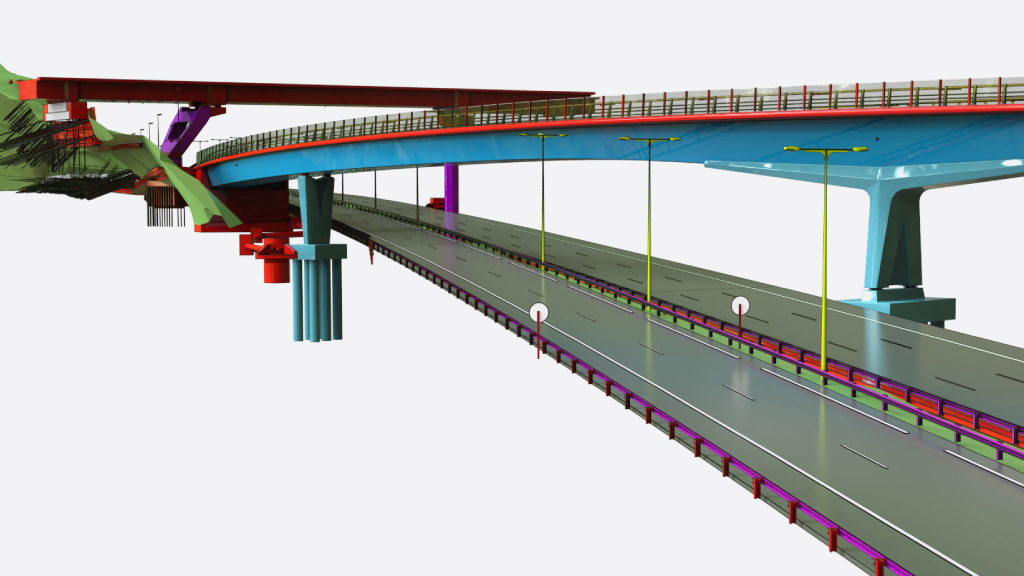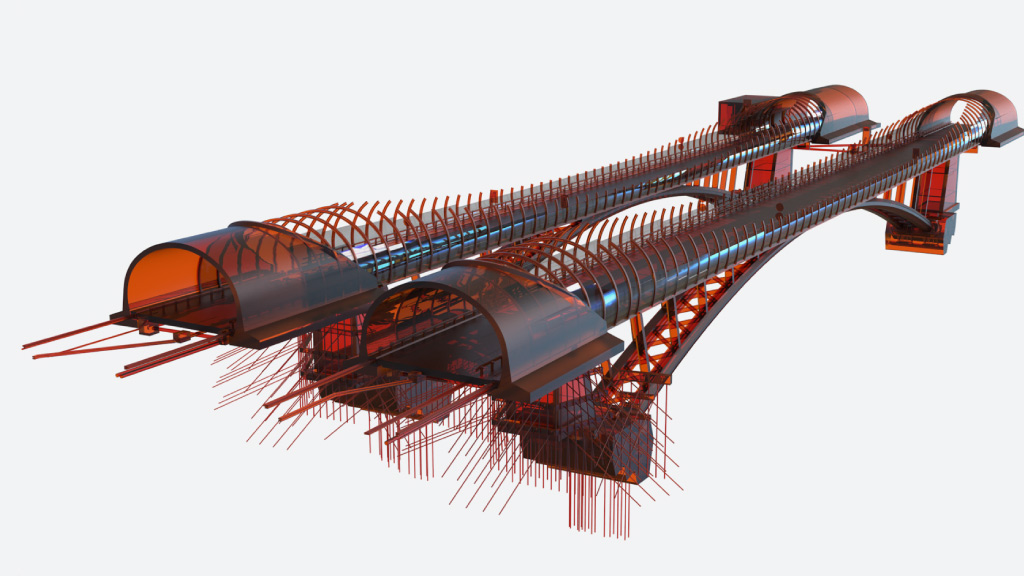

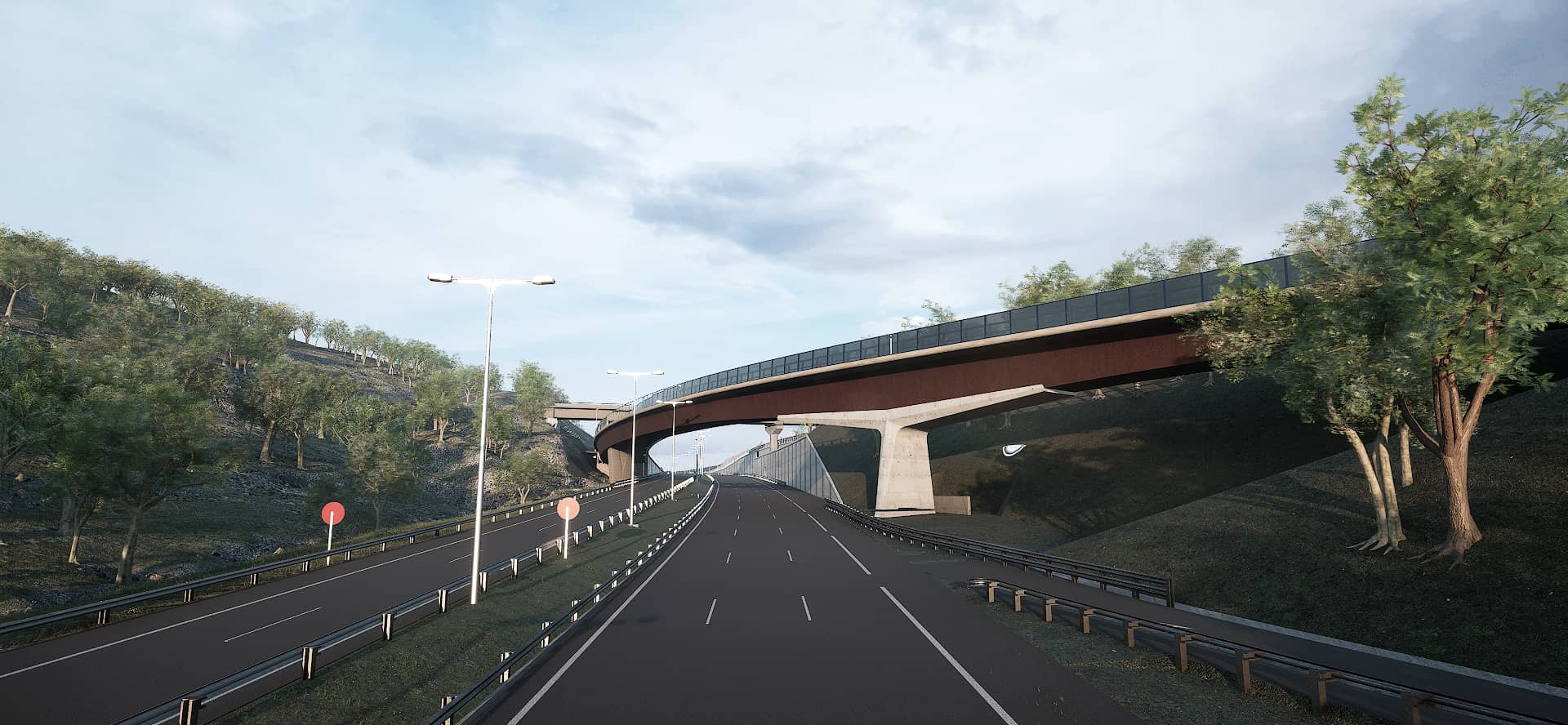
The infrastructure project, originally designed using traditional methods 15 years before construction began, was converted to BIM prior to the start of works, enabling efficient work planning, clash detection, and structured information management. During construction, rigorous monitoring was conducted, linking technical data, schedules, and documentation to the model. This process allowed the creation of an accurate progressive As-built model, useful for the future management of the infrastructure. A key aspect of the project was the stable connection of all project documentation to the corresponding model elements via VIRCORE, which supported both daily monitoring and the creation of a fully organized central repository at project completion.
During the infrastructure construction phase, the superstructure design was developed by another engineering firm. The CDE enabled this firm to access the most up-to-date infrastructure BIM models, thereby avoiding errors and inefficiencies in the design of the facilities.
The superstructure construction and assembly project was divided into two lots, with INGECID leading one of them, following the same principles established in the infrastructure construction project.
This project demonstrates the value of digitalization in large-scale linear works, improving coordination among stakeholders, ensuring process traceability, and facilitating decision-making throughout the infrastructure’s lifecycle. The project clearly addressed the key pillars of digital transformation: processes, people, and technology.
Media gallery